Onstage and Off: Authenticity, Performance Pressure, and the Freedom of an Integrated Life
A reflection for performers, creatives, leaders, and anyone navigating the space between who they are and how they show up onstage and off.
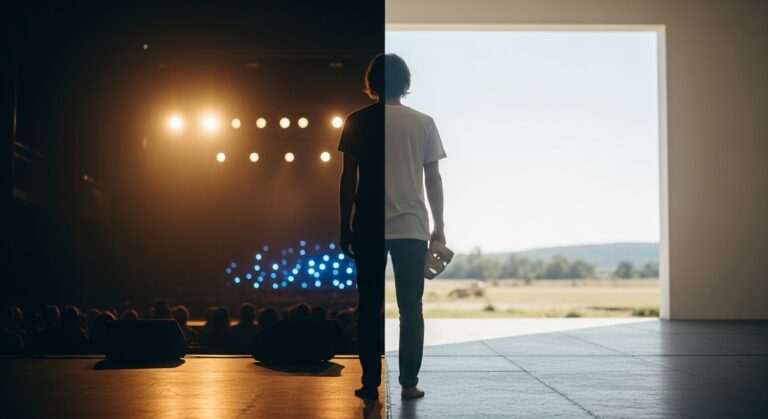
In one way or another, we are all performers.
Some of us step onto literal stages, into concert halls, theaters, studios, classrooms, boardrooms, or broadcast spaces. Others perform in quieter but no less meaningful ways: in relationships, in leadership, in caregiving, in parenting, in business, and in the daily act of showing up for life.
We learn how to be seen. We learn how to present ourselves. We learn what is expected, what is praised, and what feels safe.
And over time, many of us begin to wonder: Where do I end, and where does the performance begin?
For performers, creatives, and others living with pressure, visibility, and responsibility, this question can show up as performance anxiety, creative blocks, burnout, emotional disconnection, nervous system strain, or the quiet feeling that success on the outside is no longer matched by freedom on the inside.
This is why the relationship between authenticity and performance matters so deeply.
There is a profound difference between expression and performance, between presence and presentation, and between sharing who we are and hiding inside a role. And when that gap grows too wide, it can affect not only our creativity and confidence but also our relationships, well-being, and sense of self.
As a longtime performing artist, I have seen firsthand how the demands of being “on” can shape not only our craft but also our nervous systems, our relationships, and our identity. The stage can sharpen us, inspire us, and call forth excellence—but it can also reveal where our outer expression is no longer fully connected to our inner truth. That is one reason this intersection between authenticity, performance pressure, and inner alignment feels so important to me, both personally and in the work I now do with others.
What happens when the performer and the person fall out of alignment?
When the public self and private self begin to drift apart, the effects are often subtle at first.
It can look like being highly capable in public and strangely disconnected in private. It can look like knowing how to deliver, but not how to come down afterward. It can look like praise, competence, or success on the outside while underneath there is exhaustion, irritability, numbness, loneliness, or a quiet sense of disconnection.
We may become highly skilled at managing energy outwardly while losing touch with what is happening inwardly. And sometimes, the more polished the performance appears, the easier it becomes to miss the split.
This kind of inner misalignment can contribute to:
performance anxiety
creative blocks
burnout
emotional masking
nervous system overwhelm
relationship strain
difficulty resting after high-pressure moments
the sense that we are functioning well, but not fully living freely
Why this matters especially for performers and other high-pressure roles
Performers are often rewarded for presence, charisma, discipline, consistency, and the ability to transcend what they may actually be feeling in the moment. These are powerful skills.
But over time, the very qualities that make someone compelling onstage can also make it easier to override fatigue, emotion, and inner truth. The self who performs can become highly developed, while the self who needs honesty, restoration, nervous system regulation, and care gets pushed aside.
This is not true only for artists.
It is also true for leaders, teachers, entrepreneurs, caregivers, public speakers, and others who are required to be “on” for long periods of time. Many people live with a gap between their outer role and inner reality. They know how to show up. They know how to carry others. They know how to function under pressure. But they may not know how to return to themselves afterward.
That is why inner alignment is not a luxury. It is essential for sustainable success onstage and off.
“The goal is not to stop performing. The goal is to become so aligned that the performance is no longer a mask.” |
Why authenticity supports creativity, confidence, and sustainable success
When there is more alignment between inner life and outer expression, performance becomes less about proving and more about communicating.
Relationships become easier because there is less masking. Creativity becomes more fluid because energy is no longer tied up in self-protection, image management, or inner conflict. Confidence becomes more grounded because it is no longer built only on approval or achievement.
Even success begins to feel different. It becomes something we can actually inhabit rather than simply chase.
This is one reason authenticity is not separate from excellence. It supports excellence. When we are more integrated, we are more present, more creative, more clear, and more capable of genuine connection.
Performance is not the problem
Performance itself is not the problem. In many ways, performance is sacred.
It asks us to rise, to focus, to communicate, and to offer something meaningful. It can call forth brilliance, beauty, courage, discipline, and transformation. A performer can open hearts, tell the truth, and create experiences that profoundly affect others.
But when outer performance becomes disconnected from the inner self, something begins to fracture.
We may look polished, capable, and successful from the outside, while privately feeling strained, fragmented, or far away from who we really are. We may know how to deliver, but not how to rest. We may know how to inspire, but not how to feel free in our own lives. We may shine in public, yet struggle to feel grounded in love, friendship, leadership, or quiet moments alone.
What changes when integration begins?
As integration deepens, something subtle but powerful begins to change.
Performance becomes less about managing an image and more about expressing something real. Creativity becomes more fluid because energy is no longer tied up in internal tension or self-protection. Relationships become easier because we are no longer dividing ourselves between who we are inside and who we believe we must be for others.
There is often less burnout, less inner conflict, and more nervous system steadiness. We begin to feel more at home in our own lives.
Instead of success feeling like something fragile we have to maintain, it becomes something we can actually inhabit with greater clarity, confidence, and freedom.
When the performer and the person begin to align, life itself becomes more coherent. There is more peace, more vitality, more creativity, and more genuine connection — both onstage and off.
The freedom of an integrated life
We are all performers in some way.
Yet true freedom begins when our public self and private self are no longer at odds. The more authentic and integrated we become, the more power, peace, connection, creativity, and sustainable success we can experience onstage and off.
This is at the heart of my SoundPath work: helping people come into greater alignment between their inner truth and outer expression, so they can live and lead with more freedom, confidence, and wholeness. If that speaks something in your own life, the complimentary Starlight Call offers a quiet place to begin an opportunity to explore what may want support, healing or deeper alignment as you move forward.
About Karen Olson, Ph.D.
Karen Olson, Ph.D. is a multi-award-winning violist, composer, and recording artist whose albums have reached the Top 10 on five Billboard charts. She is also a longtime member of The New York Pops and best-selling author of SoundPath. Drawing on her experience as a high-level performer, she helps performers and others navigating success, pressure, and change release subconscious beliefs and patterns that no longer serve them, so they can experience greater creative flow, confidence, freedom, transformation, and sustainable success on stage and off.